In Shanghai’s fiercely competitive F&B landscape, standing out isn’t easy. For one local restaurant serving authentic international cuisine, the challenge was familiar: great food, loyal in-person customers, but a digital presence that wasn’t driving growth. Takeout orders were inconsistent. Online discovery was nearly non-existent. And the team was spending hours managing orders manually through WeChat messages.
That’s when they called Nimbadata.
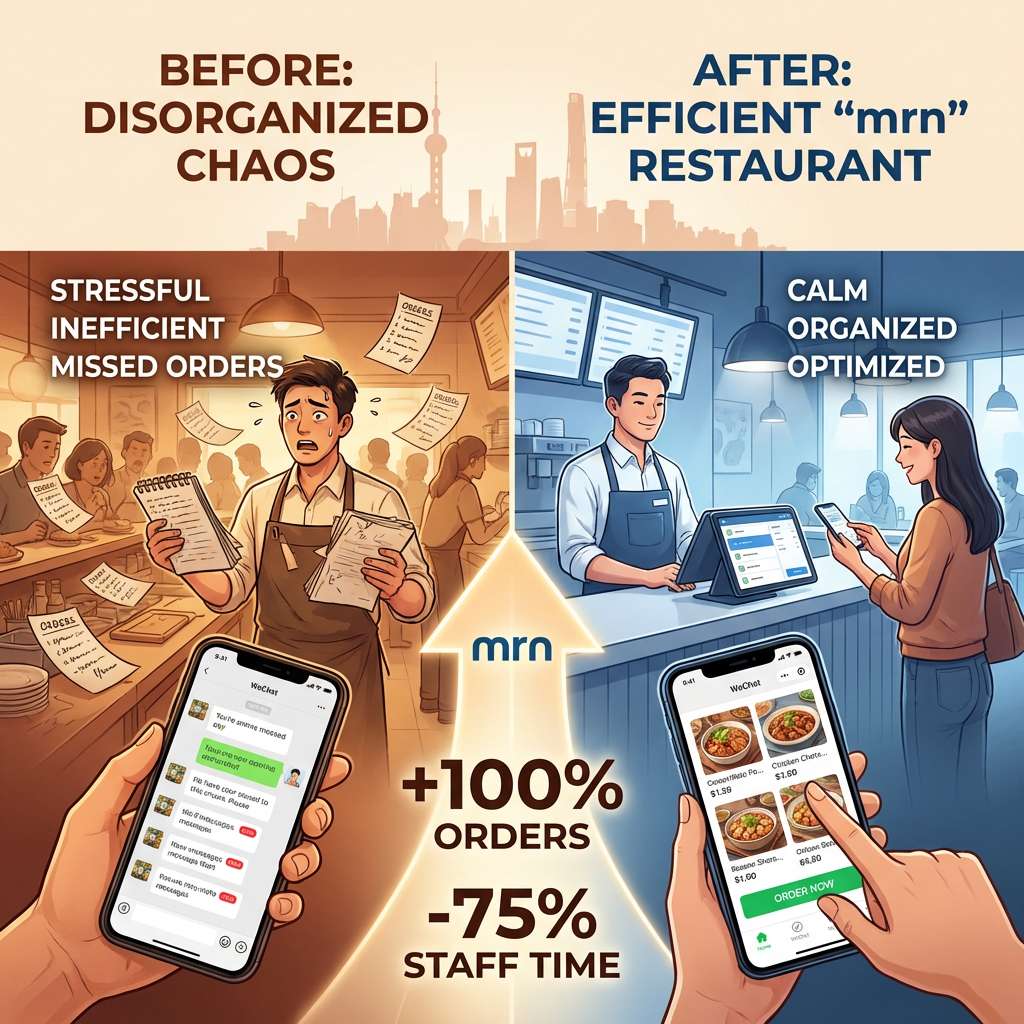
This case study walks you through how we partnered with this Shanghai restaurant to build a WeChat Mini-Program that didn’t just digitize their operations—it transformed them. The result? Takeout orders doubled in three months, customer retention improved, and the team reclaimed hours every week.
Part 1: The Challenge – A Digital Presence That Wasn’t Working
Before we stepped in, the restaurant had:
- A basic website that was rarely updated and wasn’t mobile-optimized
- No online ordering system – customers messaged the restaurant’s WeChat account to place takeout orders
- Manual order management – staff copied orders from WeChat into a notebook, leading to errors and missed orders
- No customer data – no way to track repeat customers or run promotions
- Zero visibility on platforms where Shanghai diners actually search for restaurants
“Every day was chaos,” recalls the owner. “During lunch rush, WeChat messages would pile up. We’d miss orders, double-book, and have no idea who our regular customers were. We knew we needed a better system, but we didn’t know where to start.”
Part 2: The Solution – A Custom WeChat Mini-Program
After a thorough discovery session, we recommended a WeChat Mini-Program as the foundation of the restaurant’s digital transformation. Here’s why:
- Meet customers where they are – the restaurant’s customers were already on WeChat
- Seamless ordering – built-in WeChat Pay for frictionless transactions
- Shareable – customers could share the Mini-Program with friends, driving organic growth
- Data capture – we could track orders, customer preferences, and behavior
What We Built:
| Feature | Description |
|---|---|
| Digital Menu | Beautiful, easy-to-navigate menu with photos, descriptions, and prices in both Mandarin and English |
| Online Ordering System | Customers select items, customize (spice level, add-ons), and pay within the Mini-Program |
| Order Management Dashboard | Staff view incoming orders in real-time, with clear organization (pending, preparing, ready) |
| Customer Database | Automatic capture of order history, preferences, and contact info |
| Loyalty Program | Points-based system rewarding repeat customers with discounts and free items |
| Push Notifications | Targeted promotions sent directly to customers who opted in |
| QR Code Integration | Table-top QR codes for dine-in ordering, reducing waitstaff workload |
The Development Process:
We worked closely with the restaurant over 8 weeks, from concept to launch:
- Discovery (Week 1-2): Mapped out their ordering workflow, menu structure, and customer journey
- Design (Week 3-4): Created a clean, appetizing interface that reflected the restaurant’s brand
- Development (Week 5-6): Built the Mini-Program, integrated WeChat Pay, and set up the order management dashboard
- Testing (Week 7): Ran live tests with staff and friendly customers to catch any issues
- Launch & Training (Week 8): Trained staff on the new system and promoted the Mini-Program to existing customers
Part 3: The Results – Doubled Orders, Happier Customers, Less Chaos
3 Months Post-Launch:
| Metric | Before | After | Change |
|---|---|---|---|
| Monthly Takeout Orders | 180 | 360+ | +100% |
| Average Order Value | 85 RMB | 98 RMB | +15% |
| Repeat Customer Rate | 22% | 48% | +118% |
| Staff Time on Orders | 4 hrs/day | 1 hr/day | -75% |
| Customer Satisfaction Score | 3.8/5 | 4.6/5 | +21% |
Beyond the Numbers:
- No more missed orders: Every order is captured digitally, with clear status tracking.
- Customer insights: The restaurant now knows who their regulars are, what they order, and when. They’ve used this data to run targeted promotions (e.g., “Your favorite dish is back! 20% off this week”).
- Organic growth: Customers share the Mini-Program with friends. The restaurant estimates 30% of new orders come from referrals within WeChat.
- Reduced staff burden: With table-side QR codes for dine-in ordering, waitstaff spend less time taking orders and more time on hospitality.
What the Owner Says:
“The Mini-Program changed everything. We went from feeling overwhelmed to feeling in control. Our customers love the convenience, and we love the data. Orders are up, stress is down, and we’re finally able to focus on what we do best: great food and great service. Nimbadata didn’t just build a tool; they became a partner in our growth.”
Part 4: Why a Mini-Program Was the Right Choice
This restaurant’s success wasn’t luck. It was the result of choosing the right tool for their specific needs. Here’s why a Mini-Program made sense:
| Factor | Why It Mattered for This Restaurant |
|---|---|
| Customer Behavior | The restaurant’s customers were already using WeChat daily. A website would have required them to leave the app. |
| Transaction Type | High-frequency, low-value transactions (meals) are perfect for Mini-Programs. |
| Discovery | QR codes in the restaurant and shared links in WeChat groups drove immediate traffic. |
| Loyalty | Built-in points system encouraged repeat visits without complex external tools. |
| Cost | Mini-Program development was more affordable than a full e-commerce website with similar functionality. |
Could a Website Have Worked? Possibly. But it would have required customers to leave WeChat, remember a URL, and enter payment details separately. The friction would have reduced conversion rates. The Mini-Program removed those barriers.
Part 5: Lessons for Other Shanghai Restaurants
If you’re in the F&B business, here are key takeaways from this restaurant’s journey:
1. Start with the customer journey. Don’t just build a tool; map how customers actually behave. This restaurant’s customers were already on WeChat. Meet them there.
2. Integrate payment seamlessly. WeChat Pay integration was critical. Any extra step between “add to cart” and “paid” would have cost orders.
3. Use data to drive decisions. The restaurant now knows which dishes are most popular, when customers order, and who their best customers are. That data shapes menu updates and promotions.
4. Train your team. The best tool is useless if staff don’t use it. We spent dedicated time training the restaurant’s team and created simple documentation for reference.
5. Promote relentlessly. The restaurant put QR codes everywhere: tables, takeout bags, receipts, and social media. They also offered a discount for first-time Mini-Program users to drive adoption.
Conclusion: Your Restaurant Could Be Next
This restaurant’s story isn’t unique. Across Shanghai, restaurants, retailers, and service businesses are discovering the power of WeChat Mini-Programs to streamline operations, engage customers, and drive growth.
At Nimbadata, we specialize in helping Shanghai SMEs build digital solutions that deliver real results. Whether you’re a restaurant, a boutique, or a service provider, we can help you find the right tool for your business—and implement it seamlessly.
Ready to double your orders? Contact Nimbadata for a free consultation. Let’s discuss how a WeChat Mini-Program—or another digital solution—can transform your business.